The Quiet Work That Makes a Champion's Skill Look Easy
Deliberate practice gives a champion’s skill direction through clear cues, varied conditions and useful feedback, helping athletes carry movement into play.
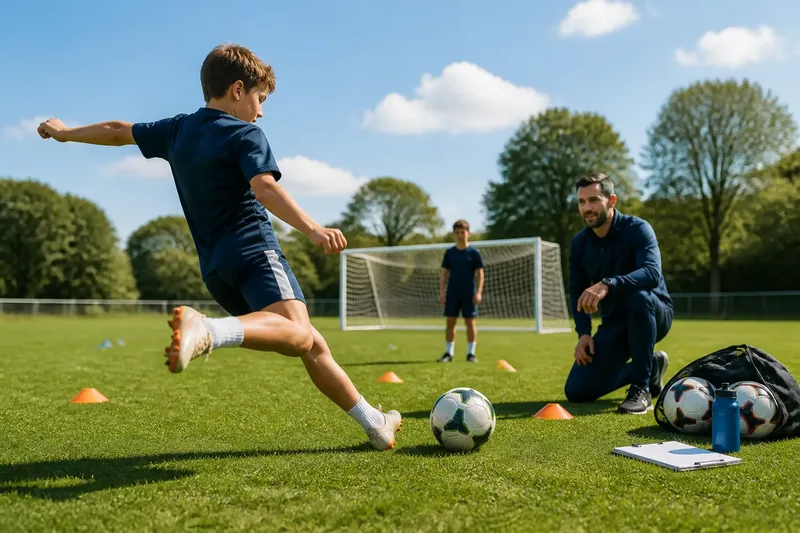
How does deliberate practice make a difficult sporting action look simple? Usually, not through a secret drill, but through a clear focus: an athlete repeats a movement, notices what changes and returns to it with a more useful purpose. The performance is brief; the work behind it has a rhythm.
That rhythm matters in a local club as much as on a large stage. A clean pass, a balanced turn or a reliable serve is not produced by repetition alone. Practice becomes useful when an athlete knows what to attend to, receives feedback that helps them decide what to try next, and gradually meets conditions closer to the sport itself.
Choose one clear cue
Start by naming an observable part of the action. “Improve your technique” is too broad to guide a session. A cue such as “finish the pass toward the target” or “keep your head still through contact” points attention toward one movement. The cue should suit the athlete’s level and the coach’s knowledge of the discipline.
One cue is enough for a short practice block. Several corrections at once can leave an athlete trying to monitor too many things during a fast action. Choose the detail that most directly affects the next attempt, then give the athlete room to try it without interruption.
Say a youth basketball player often sends a chest pass wide while moving across the court. The coach chooses “show the target with the finish” and sets up a short passing lane with a partner. If the player’s hands and the ball’s direction become easier to judge together, the cue is helping; if the ball still drifts, the coach can adjust the task or seek a different technical explanation.
Build a practice rhythm
A useful training week does not require every session to look the same. The aim is to give an action focused attention, then ask whether it holds up when the task changes. This sequence is a flexible pattern, not a prescription; practice time, recovery and coaching support should suit the athlete and the demands of the sport.
- Observe and select: After the ordinary warm-up, watch a few familiar attempts. If the action is inconsistent at a particular point, choose one cue and begin with a simple task; if no clear difficulty stands out, ask the athlete what part of the movement feels uncertain before choosing a focus.
- Repeat with feedback: Return to the same cue in a manageable task. If the athlete can describe or recognize the movement change, leave some attempts without commentary; if the cue remains unclear, offer one concise observation or simplify the task.
- Vary one condition: Change the starting position, target, pace or partner while keeping the central action recognizable. If the athlete still uses the cue, retain the variation; if the movement becomes confused, restore the previous condition and try a smaller change.
- Add a decision: Introduce a realistic choice, such as selecting a pass based on a teammate’s position. If the athlete can use the skill while making that choice, continue with the task; if attention shifts entirely to the technical detail, simplify the decision and rebuild it later.
- Review and reset: Compare what the athlete intended with what they could observe. If the cue remains useful, keep it; if it is vague, make it more specific; if the action holds up across suitable tasks, shift the focus while returning to the skill in broader practice.
This progression can be compressed or spread across a season. What matters is moving from attention to repetition, then variation and use. For young athletes especially, sessions should leave room for enjoyment, exploration and the other demands of life outside sport.
Keep repetition attentive
Repeating an action without a point of attention can make practice feel busy while teaching little. An athlete may send balls, take shots or run drills without a way to distinguish a useful attempt from an unhelpful one. A brief pause to name the cue can give the next repetition a clearer purpose.
Feedback should be specific and proportionate. “That was better” offers encouragement but little information. “You kept your balance through the turn” names something the athlete can recognize and try again. Not every attempt needs commentary, though. A quiet stretch lets the athlete notice the movement and take ownership of an adjustment.
Simple tools can help without turning practice into a production. Cones mark a target or lane; chalk can show a starting position; a notebook can record the cue and the condition being practiced. Video may help when a qualified coach can interpret what it shows, but replaying every attempt is rarely necessary. The tool should answer a question, not become the session’s main event.
It is not worth chasing a perfect-looking movement in every repetition. Sport unfolds amid changing pace, space and pressure, and a technically neat action that cannot adapt may be less useful than a robust one. The aim is a skill the athlete can call on, not a pose held for inspection.
Change the task carefully
Once the athlete understands a cue in a simple setting, vary the task in a controlled way. A runner might practice a relaxed arm action on a gentle curve as well as on a straight. A netball player might pass to stationary partners before adding a moving receiver. The exact variation depends on the sport, but the principle is steady: preserve the skill’s purpose while changing one demand at a time.
Variation helps reveal whether the athlete has learned an action or memorized a setting. If a movement works only from one spot and at one pace, it may not yet be available in play. If it falters when a condition changes, that is useful information. The coach can simplify the task, keep the cue and build the demand again rather than treating difficulty as failure.
For community clubs, this kind of practice also makes coaching’s purpose easier to see. A parent watching from the edge may see a player repeat an ordinary pass; the player and coach know the target, cue and decision being developed. Explaining that purpose can help others value quiet practice without promising a particular result.
When should practice change?
How many repetitions should an athlete do?
There is no useful universal count. Stop or change the task when attention fades, movement quality slips or the athlete can no longer explain the cue; the appropriate amount also depends on the sport, age and session context.
Should a coach correct every attempt?
No. Frequent correction can crowd out an athlete’s own observation. Offer concise feedback when it clarifies the chosen cue, then leave some attempts for the athlete to assess.
What if the skill gets worse under pressure?
Return to a simpler version and identify which added demand is causing trouble. Reintroduce that demand gradually, while keeping the technical cue familiar and the athlete’s workload appropriate.
When is it time to move on?
Move forward when the athlete can use the action across varied but suitable tasks, not merely repeat it in one drill. Keep returning to the skill as part of broader practice, because fluent execution still needs to adapt.
Notice fluency in context
A fluent performance is not always the fastest or smoothest-looking version of an action. It fits the moment: the athlete recognizes the situation, chooses a response and carries it out without consciously assembling every component. That ease may be visible as balance, timing or a calm decision, but it grows from practice that connects movement with purpose.
Keep review grounded in observable details. Ask what changed in the action, under which conditions it held up and what the athlete noticed. Avoid treating one good attempt as proof that a skill is settled. A coach can note the cue and task so the next session begins with a useful reference rather than a vague demand to “do better.”
The quiet work behind a champion’s skill is not an endless supply of repetitions. It is the patient arrangement of attention: one clear cue, enough practice to explore it, variation that tests its usefulness and recovery that lets the athlete return ready to learn. When the action finally looks easy, the practice has done its best work by disappearing from view.
For a local athlete, the next session can begin with a question: what can you notice in the movement that you could not name before? That small act of attention gives repetition direction, helping the skill travel beyond the drill and into play.