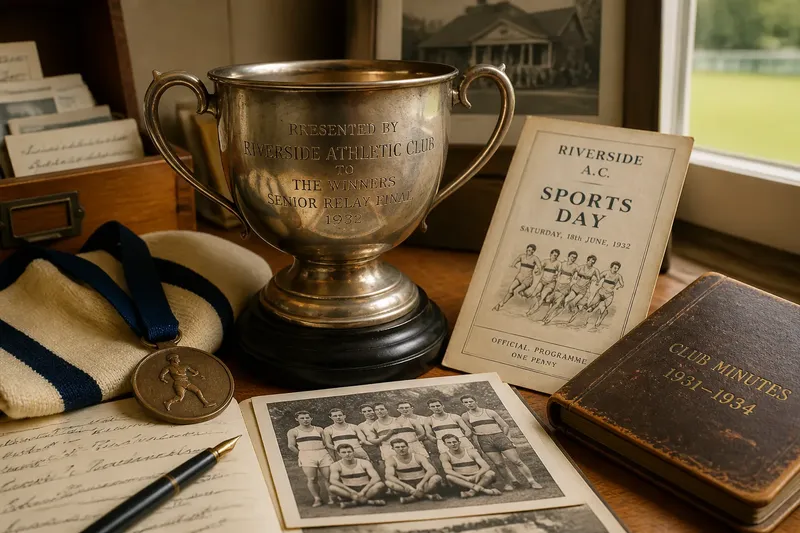
A Club Ground or a Shared Public Pitch?
Compare a club ground with a shared public pitch to see how access, routine and shared use shape a local sporting story and its place in the neighborhood.
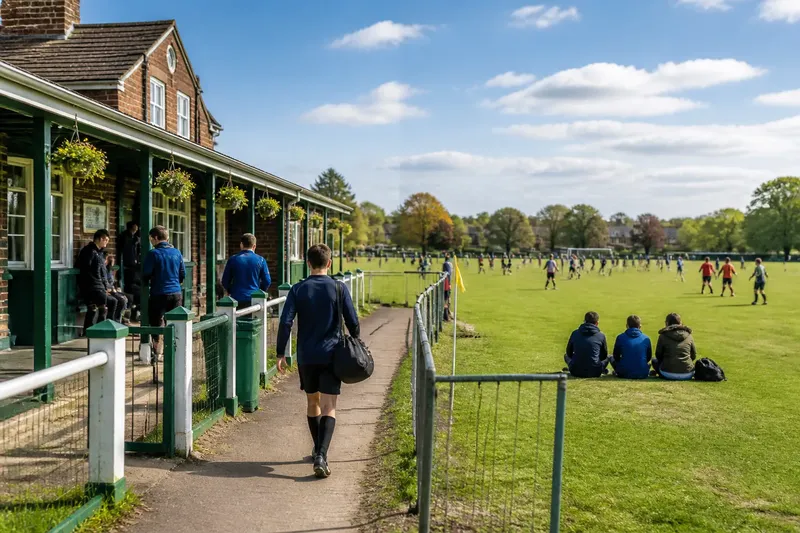
Which place tells a local sporting story more honestly: a club ground with a settled identity, or a public pitch used by many groups? Comparing a club ground with a shared public pitch means looking beyond the playing surface. The setting shapes who can arrive, what routines endure, and how a champion’s achievements become part of a neighborhood’s sense of place.
Start with the question you want the place to answer. Are you tracing how one club built continuity across generations, or how different users made a common space their own? A ground can be physically modest yet central to a club’s memory, while a public field may hold many stories without belonging to any one team.
Choose the story’s lens
Before comparing sites, write down the sporting story’s central change. It might be a player’s move from junior competition to senior level, a team’s return after a difficult period, or a club’s relationship with a changing district. Keep the focus on the place’s role in that change, not on compiling every result or personal detail.
A useful working question is: what could happen here because this space was organized in this particular way? A dedicated ground may offer regular access, familiar boundaries, and club-controlled rooms. A shared pitch may bring different sports and age groups into contact, while its availability and layout shift with public schedules and community needs.
Make a short note of what you already know and what you still need to check. Separate observable features—such as a marked entrance or movable goals—from interpretations, such as whether a place feels welcoming. That separation keeps an article grounded without treating one visitor’s impression as the whole community’s experience.
Walk the dedicated ground
At a club ground, follow the route a player or supporter would take from the street to the field. Notice the entrance, the view from the boundary, the changing area, storage, seating, and any room where people gather before or after play. Ask which parts are open to visitors and which belong to members or scheduled users.
Then look for signs of continuity. A painted name, a familiar pavilion, a boundary maintained in the same position, or equipment stored in a regular place can make the ground feel like an ongoing home. These details do not prove that every generation experienced the site in the same way. They show what the club has chosen to preserve and what a visitor can see today.
Ask how the site’s arrangements shape participation. If the club controls bookings, upkeep, and access, it may be able to maintain predictable training routines. The same control can create thresholds for people who are not members, new arrivals, or users of other sports. Describe the practical arrangement rather than assigning motives to it.
Listen for the vocabulary people use about the ground. A player may call it “home,” while a groundskeeper may talk about drainage, mowing, or the strain of preparing the surface. Those perspectives can sit beside each other. If you include anyone’s words, confirm their meaning and permission rather than turning a passing remark into a representative view.
Read the shared pitch
At a shared public pitch, begin with the timetable and the signs that explain its use. Look for booking notices, field markings, portable goals, storage arrangements, and indications that different sports or community groups use the same area. A pitch may look empty during a visit yet have a full schedule at another time, so check relevant local booking information before drawing conclusions.
Watch how the space changes between uses. Lines may be repainted, equipment moved, or one activity yield to another. These shifts are not merely background. They can shape a sporting story through adaptation: teams may have to work around shared access, and players may encounter other groups whose routines overlap with theirs.
Shared use can make a pitch an unusually visible part of neighborhood life. People walking through, waiting nearby, or using an adjacent play area may see a match without joining it. But visibility should not be confused with equal access. Ask who can book the field, how the schedule is communicated, and whether users have somewhere to store equipment or gather.
Describe the conditions without treating change as either a flaw or a virtue. A field with several markings may signal a practical arrangement rather than neglect; a bare stretch of grass may reflect a period between scheduled activities. If an observation is temporary, say so. The point is to show how shared use affects the sporting setting, not to judge the people who manage it.
Compare access and routine
Once you have visited both kinds of place, compare them using the same questions. This avoids giving the club ground credit for its atmosphere while judging the public pitch only by its surface, or the reverse. For each item, record what you observe; then follow the decision that fits the evidence:
- Entry: Check gates, posted rules, and the route to the field. If access is clearly limited, describe the restriction; if it is unclear, ask the organization rather than assuming the site is open to everyone.
- Booking: Check notices or the local schedule for who assigns time. If one group controls bookings, explain how that shapes routine; if several groups share them, describe the coordination users need.
- Fixed features: Check for permanent markings, buildings, storage, and repeated arrangements. If these remain in place, consider how they support continuity; if they change, ask what determines the layout.
- Between-use changes: Check whether lines or equipment move between activities. If they do, explain the adaptation required; if they do not, avoid claiming the space changes simply because it is shared.
- Gathering places: Check where people wait, talk, watch, or prepare to play. If a clear gathering point exists, describe who uses it; if none is visible, ask participants where they meet rather than inventing a social hub.
- Maintenance: Check for visible upkeep, such as mown edges or stored tools. If the responsible party is identified, attribute that information; if not, describe only what you can see.
- Recurring memories: Ask participants about a repeated route, sound, view, or routine. If accounts agree, report that shared detail with attribution; if they differ, preserve the difference instead of presenting one memory as universal.
Do not turn the notes into a scorecard. A club ground may offer dependable routines but limited public access; a shared pitch may welcome varied users but offer less control over timing. The useful comparison is not which type wins, but which arrangement helps explain the story you are reporting.
Follow the place’s role?
Does a club ground always belong to one team?
Not necessarily. A dedicated ground can host guests, junior sides, community events, or other activities, even if one club gives it its main identity. Check how the site is actually used before describing it as exclusive.
Can a public pitch have a lasting identity?
Yes. Repeated gatherings, familiar routes, and local habits can give a shared field a strong identity without making it the property of one team. Look for continuity in people’s use as well as in buildings or markings.
What should I ask about access?
Ask how a team books the space, what times are available, and what a first-time user needs to know. If the answer involves local rules or a facility’s specific terms, verify those directly with the relevant organization.
How can I avoid romanticizing either setting?
Describe what each place makes possible and what it constrains, using observed details and attributed accounts. Avoid assuming that a club ground is close-knit or that a public pitch is open to everyone simply because of its appearance.
Connect place to turning points
Now trace the relationship between the site and the sporting change you identified at the outset. A place may matter because a team could train there consistently, because a player had to adapt to a new surface or schedule, or because supporters gathered around a shared event. Establish the connection with specific details and corroborated accounts rather than treating the location itself as a cause.
Say you are writing about an invented neighborhood runner who joined a local club after years of informal training on a public field. The runner’s starting routine is flexible: training happens when the field is available, with no dedicated club room. You compare that with a regular club training slot, check how each space is scheduled, and ask the runner what changed in preparation and belonging. The resulting account can show a shift from improvised access to a more predictable routine, while leaving open whether that change affected the runner’s performance.
Keep the scale of the claim proportionate. If a room, gate, or marked boundary appears in one person’s memory, it can illuminate that person’s experience. It cannot stand in for every participant. Where accounts differ, let the difference remain visible; disagreement may reveal that the same place served people in distinct ways.
Keep the reporting grounded
For each site, note the date and conditions of your visit in your working records, especially if weather or an event schedule affected what you could see. Check public information for access and use, and ask a club or facility contact about details that are not visible. For safety, access, and booking questions, follow posted instructions and the relevant organization’s guidance.
Photographs can help you remember the arrangement of a space, but they need context. A close view of a worn patch says little about how the field is maintained across seasons; a crowded sideline may reflect one unusual event. Pair images with notes about what was happening and what remains uncertain.
It is not worth cataloging every piece of equipment or every mark on the ground. Include a detail only if it helps explain access, routine, change, or memory. A spare account of a gate that stays locked outside club hours may tell the reader more than a long inventory of fixtures.
Shape the comparison
When you draft, give each setting enough space to be understood on its own before placing them side by side. Use the same practical dimensions for both: access, control, routine, adaptation, and gathering. Then return to the sporting story and explain which features mattered, to whom, and under what circumstances.
The strongest comparison may not resolve into a choice between a club ground and a shared public pitch. A dedicated site can preserve a team’s recognizable home while a public field makes sporting life more permeable to the neighborhood. For a local champion, either setting—or movement between them—can reveal how sporting identity forms around spaces people repeatedly use.
To make a club ground or shared public pitch meaningful on the page, name the specific arrangements that shape participation and memory. Before publishing, check that each claim about access, use, or control is supported by an observation or a clearly attributed account. That distinction helps readers see both the place and the limits of what one visit can tell them.