Before the Plaque: How Sporting Honours Found Their Place
Local sporting honours show how a community’s memory took shape, connecting a champion’s medal to the events, people, and places behind it.
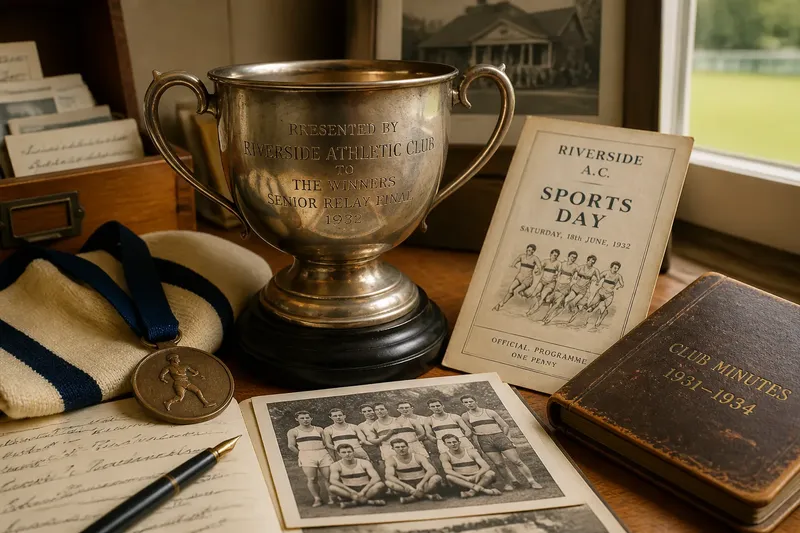
How did a champion’s name move from a result on the field to a place in local memory? Local sporting honours often began with a public act of recognition: a club presented a cup, a town marked a victory, or a newspaper recorded a result. The medal or plaque that survives is only one trace of that process; the choices made around it shaped what later generations remembered.
Recognition takes shape
Awarding a trophy gave achievement a visible form, but the honor mattered because people recognized what it represented. A cup might commemorate a decisive final, a season of steady play, or a competitor who carried a club’s name beyond its home ground. The inscription could record a winner and event; speeches, reports, and club minutes helped explain why the community considered the result worth marking.
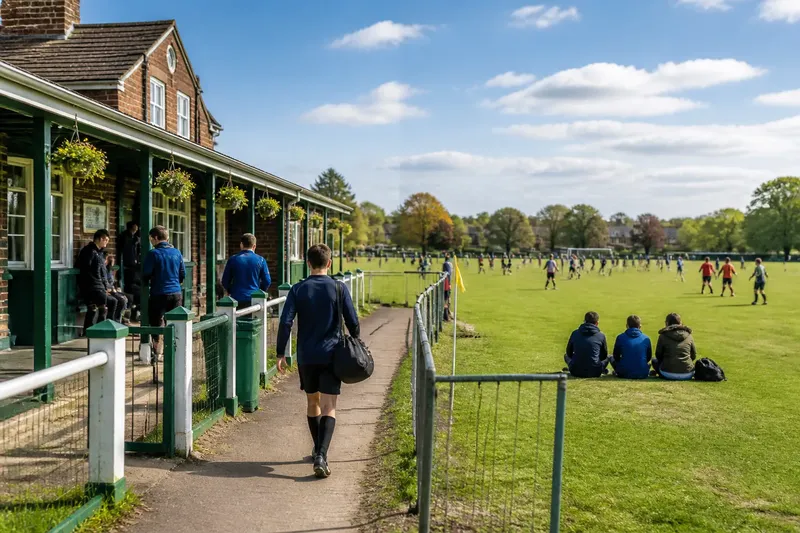
These acts of recognition were not all alike. Some honors came from a sporting organization, with rules and a formal presentation. Others grew from local custom: a club dinner, a civic welcome, or a framed photograph in a clubhouse. In either case, the setting tells us who was doing the honoring and what kind of achievement they chose to celebrate.
From event to keepsake
An award’s history continued after the presentation. It might be displayed in a clubroom, carried home by its recipient, or kept with programs and photographs. Each change of setting altered who could see it and how its meaning was explained. A trophy kept among club records could recall a shared season; the same object in a family home might stand for one competitor’s private milestone.
Other objects help recover that journey. A fixture card can place an award within a particular competition, while a newspaper clipping may show how a victory was described at the time. A repaired jacket or a marked-up program can suggest how sporting life extended beyond the moment of presentation. Such objects do not speak for themselves, but together they can show how an achievement became part of everyday community memory.
Memory and its gaps
What was kept depended on who had the authority and means to preserve it. Clubs often retained formal trophies and official records, while informal notices, photographs, or equipment could be lost. The surviving collection may therefore reflect the habits of its custodians as much as the range of people who participated.
Imagine a volunteer sorting a club cupboard and finding a runner’s medal alongside race programs. One program names the relay team, while the medal identifies only the final recipient. If the volunteer places the two together and captions them as parts of the same event, visitors can see both individual recognition and the teammates who shared the race. The programs do not settle every question about the event, but they make the limits of the medal’s account visible.
That distinction matters when a display tells a champion’s story. A name on a cup confirms that someone was honored; it does not establish that the person’s experience was typical, or that others mattered less. Asking who was represented in the records—and whose contributions may have gone unrecorded—helps keep a community’s history from mistaking survival for importance.
Stories beside objects
As sporting honors entered public displays, labels and arrangements gave them another layer of meaning. A short caption can identify the athlete, discipline, event, and reason an object was retained. It can also mark uncertainty plainly: perhaps a date comes from a later recollection, or the object’s original owner is not known. A careful account distinguishes those details from facts confirmed by an inscription or contemporary record.
Where an honor is displayed matters, too. A clubhouse case may speak most directly to members who know the competition, while a library or civic building can introduce the story to people outside the club. Neither setting is automatically more fitting. The decision changes who encounters the object and what surrounding material they need to understand it.
What is not worth the effort is filling a case merely because it has room. A crowded row of trophies can flatten the differences between achievements and leave visitors unsure where to look. A few well-explained objects often make the history of recognition easier to follow.
Questions about sporting honors?
Why were trophies and medals presented?
They made a sporting result publicly recognizable and gave clubs or communities a way to mark achievement. The occasion and presenter help explain what the award meant to people at the time.
How did an award become part of local memory?
Its meaning developed through where it was kept, who could see it, and what records or stories accompanied it. A trophy in a clubhouse, for example, could connect a result to the club’s wider history.
What can an old program add to a champion’s story?
A program may identify the competition, teammates, or event details missing from an award’s inscription. It can add context without proving more than the document actually records.
How should uncertainty be handled?
State which details are supported by inscriptions or records and which come from later memories or remain unknown. That distinction lets visitors understand the story without treating a plausible account as settled fact.
Recognition in perspective
A plaque fixes a name in a public place, but the history of sporting honors reaches further back—to the event, the people who chose to mark it, and the records that carried its meaning forward. When a surviving award leaves part of that history unclear, naming the gap is useful in itself: it shows visitors where the evidence ends and where further community knowledge may begin.