The Champion Is Not a One-Person Story
The champion is not a one-person story: learn how to recognize the practical help and shared knowledge that let local sporting achievement take shape.
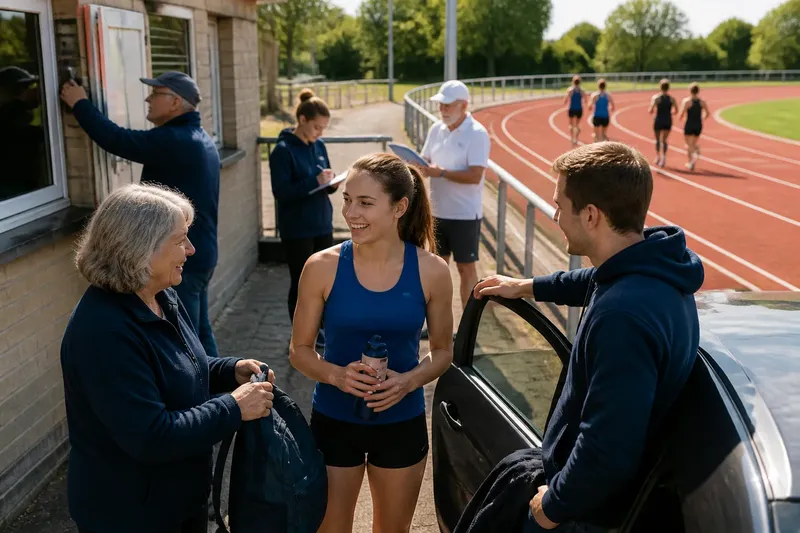
Who kept the champion’s season possible when training, travel, school, work, or family life began to collide? A local sporting champion’s story is not a one-person story, but telling it well can be harder than naming the athlete. Practical help is often quiet, and shared knowledge can disappear into phrases such as “the club supported them.” A useful account asks what people actually did, what problem it answered, and how the athlete’s own choices remained central.
When support stays vague
A profile can praise a community while leaving its contribution indistinct. “Everyone got behind her” sounds warm, yet tells a reader little about who helped, when, or why that help mattered. This usually happens when recognition is treated as a thank-you rather than as part of the sporting story.
Replace the broad claim with a specific, verified role. A teammate may have shared a ride to an away fixture; a volunteer may have opened the changing rooms; a family member may have taken on a regular household task during competition season. These are different kinds of support, not interchangeable tokens of goodwill. Naming the action makes the community visible without implying that every helper contributed equally or in the same way.
Say a local runner’s account mentions “the club’s backing,” but nobody can explain what that meant. The writer asks the runner and club members separately, then learns that a teammate arranged lifts when public transport did not suit the race schedule. The account can describe that arrangement and the problem it addressed, while leaving out details the people involved do not want shared.
When help becomes credit
Describing support can start to sound like transferring credit away from the athlete. This often comes from trying to correct the lone-hero myth with an equal-and-opposite claim: that the community, rather than the competitor, made the achievement. Neither version captures how sporting agency works.
Keep the roles distinct. The athlete makes decisions, accepts demands, and performs in competition. Other people may create conditions that make participation possible, offer advice, or provide encouragement. Those contributions can matter deeply without making the supporter a co-author of every choice or result.
When you are unsure how to phrase a contribution, connect it to the obstacle it addressed rather than claiming it caused the outcome. “Her brother drove her to training after his shift” is more careful than “Her brother made her a champion.” It credits a real action while avoiding a claim no single act can establish. Ask the people involved how they describe their roles, but do not expect them to agree on every detail.
When local knowledge disappears
A champion’s development also draws on knowledge that a club may hold collectively: how a local course behaves after rain, which competition suits an athlete’s current level, or how a team shares responsibilities on match day. Coaches, teammates, officials, and older competitors can pass this knowledge along. If a profile mentions only formal coaching, that accumulated knowledge may vanish from the account.
The knowledge-sharing may have no obvious single owner. One person offers a suggestion, another explains the local context, and the athlete decides what to use. That chain is less tidy than a named mentor, but it may be more accurate. Describe the specific information and where it was exchanged; do not invent a lesson or claim that the athlete followed advice unless someone confirms it.
Be attentive to boundaries. A coach’s private feedback, a teammate’s personal circumstances, or a club’s internal disagreement may not belong in a public profile. The point is not to extract every detail, but to show how sporting understanding travels while respecting the people who share it.
When the account leaves people out
Accounts can become skewed when the easiest people to interview are treated as the whole community. A headline coach or club officer may be visible, while the volunteer who manages fixtures, the official who keeps competition running, or the teammate who welcomed a newcomer is overlooked. Sometimes the athlete’s own account is also reduced to a quote surrounded by other people’s interpretations.
Before writing, compare the roles your story names with the roles that made participation possible. Ask who organized, taught, encouraged, transported, officiated, or made space for the athlete, then decide which contributions are relevant and which can be left out. This is not a demand to interview everyone. It is a way to notice whose work has been made invisible by habit.
Do not spend effort building a ceremonial list of every person who ever helped. A long roll call can flatten meaningful differences and distract from turning points in the athlete’s account. Focus on contributions that clarify a real constraint, exchange of knowledge, or relationship.
Which details belong in the story?
How do you credit a volunteer?
Name the task and, when appropriate, the person who took it on. If the contribution is uncertain or the person prefers privacy, describe the role without guessing at motives or adding personal details.
What if accounts conflict?
Ask each person what they remember and keep the disagreement proportionate to the story. Attribute different recollections rather than forcing them into a single version.
How can a profile avoid diminishing the athlete?
Show what the athlete chose and did, alongside the help that made those choices more workable. Avoid language that turns support into a complete explanation of performance.
Should every supporter be named?
No. Include people whose actions help readers understand the particular story, and respect privacy where recognition could expose someone to unwanted attention. A concise account of a role can be more informative than an exhaustive list.
Keep the roles distinct
A strong local sporting profile does not need a neat formula for community support. It needs accurate distinctions: who acted, what they offered, what the athlete decided, and what remains uncertain. When those parts are clear, readers can see a champion as an individual without pretending that achievement happened in isolation.
Before publication, read the account as someone unfamiliar with the club would. If that reader can tell what the athlete did and what the community contributed, the story gives both their proper place. If not, return to the concrete actions and let each person’s role stand on its own.